
myLCN CONTENT DEVELOPMENT HAS BEGUN
View our poster presented at the OTCC Conference April 11 and 12, 2026
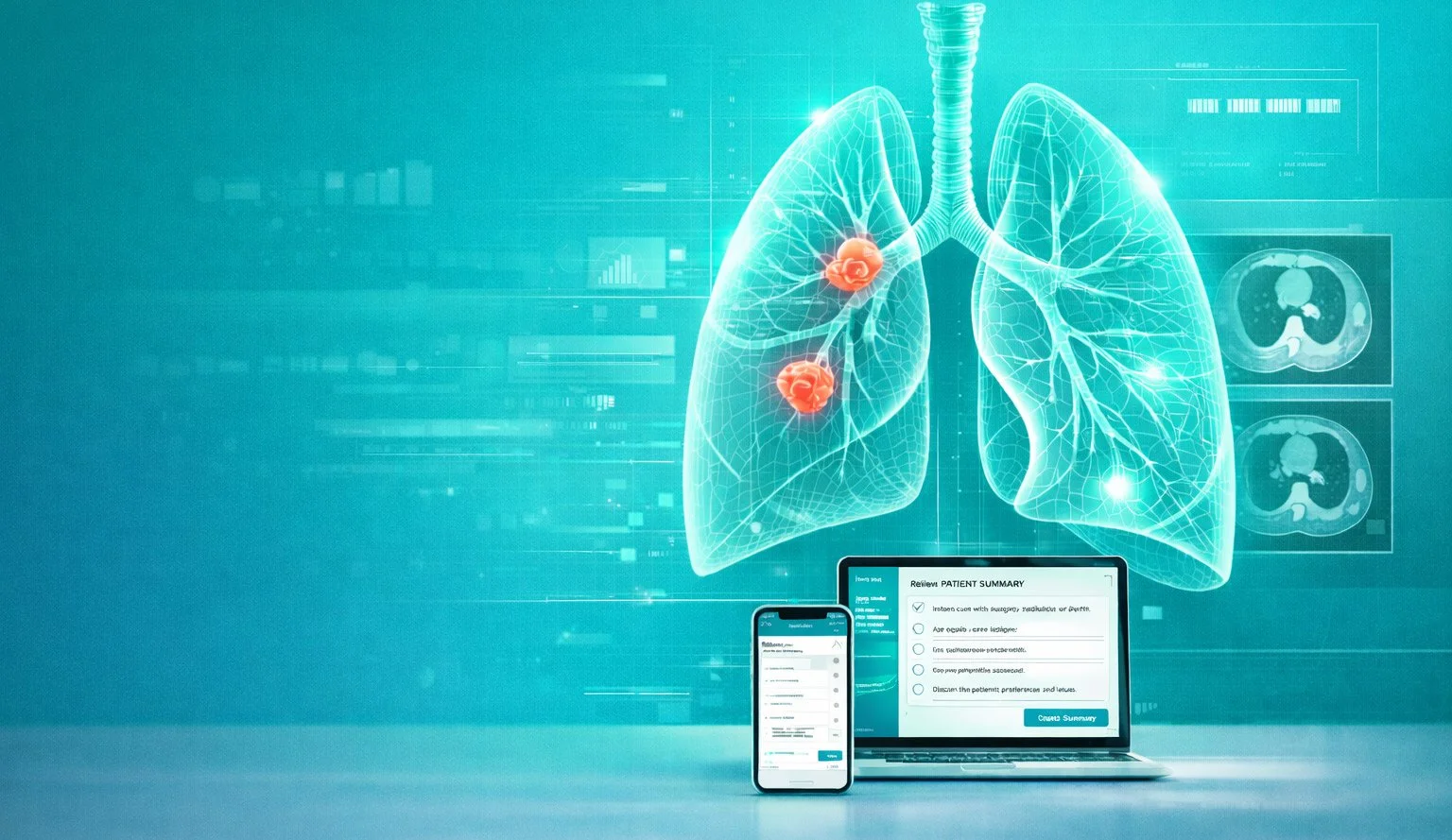
The myLung Cancer Navigator (myLCN) Point-of-Care Tool is a mobile and desktop application to facilitate shared decision making for non-small cell lung cancer (NSCLC) in the curative setting. The tool will be a decision aid, used by healthcare practitioners to support shared decision making with their patients.
Practitioners can use the tool within lung diagnostic assessment programs (LDAP) or cancer centres.
TOOL BACKGROUND
Breakthroughs in stage II/III NSCLC have led to a complex therapeutic landscape, with surgery, chemotherapy, IO, targeted agents, and radiation used in various combinations and sequences.1
Canadian Consensus Recommendations highlight the importance of shared decision making in stage II/III NSCLC, noting that the patient’s goals should be included in the formation of the MDT treatment recommendation.1
Given these complexities, it is important for clinicians to engage their patients when choosing an appropriate treatment pathway, considering institutional resources, clinical evidence, and the patient’s own values and preferences.
TOOL
RATIONALE
There is an increasing number of options for curative NSCLC treatment, including recent IO therapies
Choosing between treatment pathways can be highly complex, sometimes prioritizing institutional resources over patient goals
There is a need for a structured framework to integrate clinical evidence and treatment access with patient goals to guide treatment selection
The scientific planning committee has been convened to develop a first-of-its-kind POC support tool to best meet this need
CLINICAL DECISION SUPPORT TOOLS IN ONCOLOGY
Clinical decision support tools are an effective implementation strategy to support complex decision making in cancer management.2 These tools are evidence-based (synthesis of published and patient-specific data) to support practitioners in making appropriate therapeutic decisions.2
Clinical tools supporting therapeutic decision making in clinical cancer settings have been shown to improve:

Process Outcomes
(provider team adhering to the clinical decision support tool recommendations)

Patient Outcomes
(improvement in symptoms or in satisfaction with their care)
Tools like decision aids support clinical intervention with goal of making an explicit decision.3
Decision aids are developed using the rigour of International Patient Decision Aid Standards (IPDAS) through a shared evidence-informed framework with a set of criteria for content, development, implementation, and evaluation.4
Includes resources and information to assist patients in evaluating what matters most to them.3
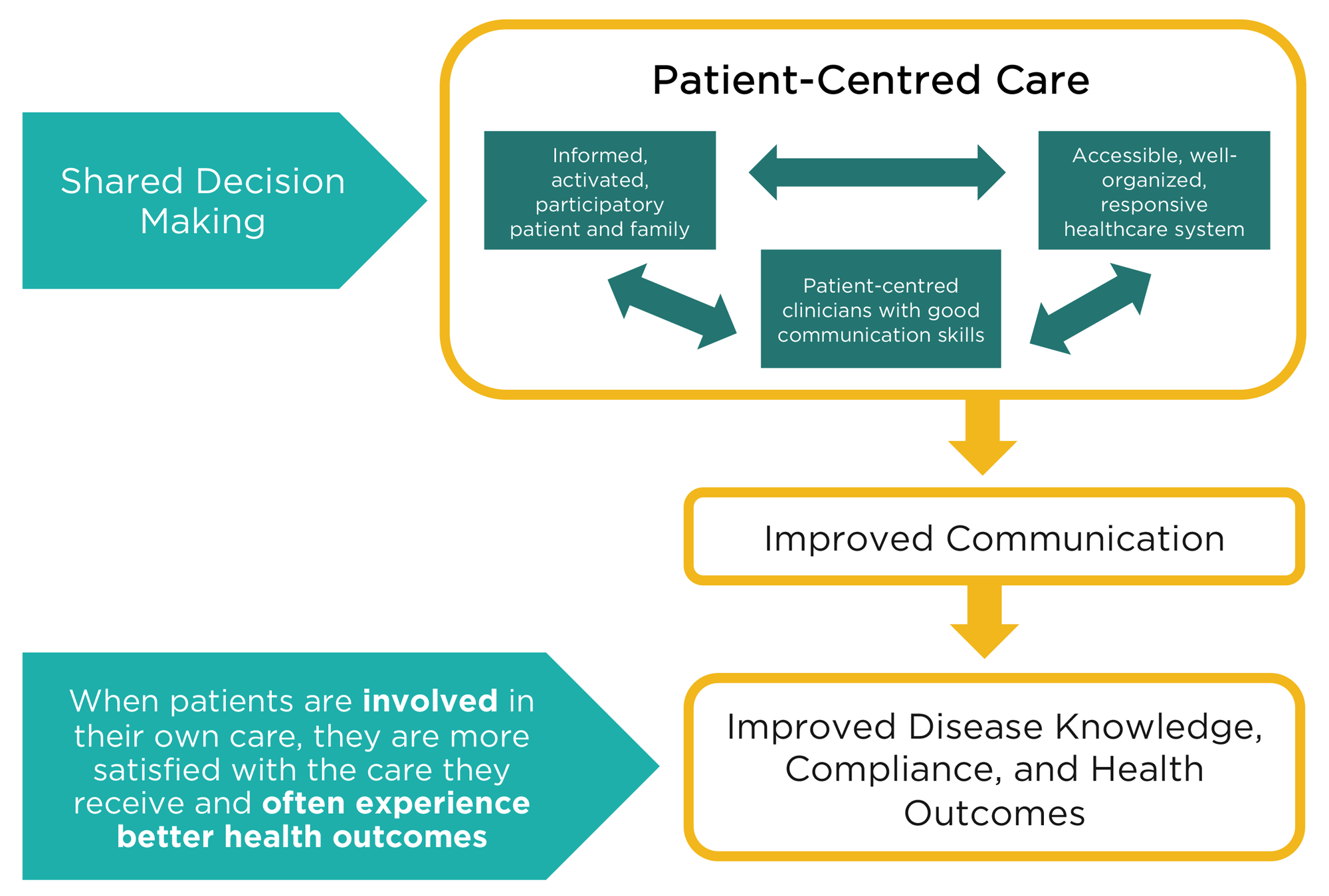
PATIENT-CENTRED CARE MODEL:
SHARED DECISION MAKING
When patients are involved in their own care, they are more satisfied with the care they receive, experience better health outcomes, show increased disease knowledge, improved compliance and reduced anxiety.5-11
-
Tankel J, et al. Curr Oncol. 2023, 30, 10363–10384
Beauchemin, M. et al. Int J Med Inform. 2019;130:103940
Stacey D, Legare F. Can Oncol Nurse J. 2015;25(4):455-461
International Patient Decision Aid Standards. Retrieved from: http://ipdas.ohri.ca/
Alston C, et al. NAM Perspectives. Communicating with patients on health care evidence: Discussion paper. 2014
Center for Advancing Health. Snapshot of people’s engagement in their healthcare. 2010
Hibbard JH, Greene J. Health Aff (Millwood). 2013;32(2):207-214
Lantz PM, et al. Health Serv Res. 2005;40(3):745-767
Maurer M, et al. Guide to patient and family engagement: Environmental scan report. 2012
Roseman DJ, et al. Health Aff (Millwood). 2013;32(2):232-241
Klok JM, et al. BMJ Open Respir Res. 2025 Nov 4;12(1):e003114
STEERING COMMITTEE
A Steering Committee of multi-disciplinary key opinion leaders and clinicians in the field of lung cancer are developing the tool in collaboration with Lung Cancer Canada.
This will effectively support development of high-quality evidence-based content across multiple settings, including the neoadjuvant and perioperative setting, adjuvant systemic therapy, and concurrent chemo-radiation.
Chair
Arani Sathiyapalan
MD, MSc, FRCP(C)
Medical Oncology
Juravinski Cancer Centre
Hamilton, Ontario
Se-In Choe
MDCM, MSc
Thoracic Surgery
St. Joseph’s Healthcare
Hamilton, Ontario
Peter Ellis
MBBS, MMed, PhD, FRACP, FRCPC
Medical Oncology
Juravinski Cancer Centre
Hamilton, Ontario
Sara Kuruvilla
MD, FRCPC
Medical Oncology
London Health Sciences Centre
London, Ontario
Khaled Ramadan
MD, PhD, FRCSC
Thoracic and Foregut Surgery
Michael Garron Hospital
Toronto, Ontario
Anand Swaminath
MD, FRCPC
Radiation Oncology
Juravinski Cancer Centre
Hamilton, Ontario
Michele Wright
Manager, Patient Support Programs
Lung Cancer Canada
Toronto, Ontario

Winky Yau
Manager, Medical Affairs
Lung Cancer Canada
Toronto, Ontario
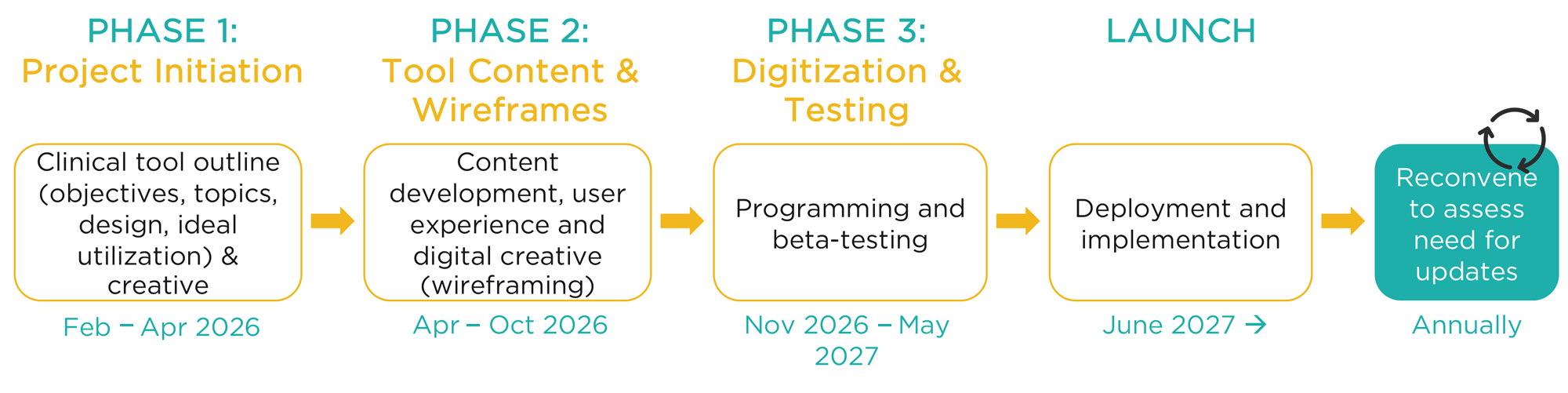
TIMELINE AND AVAILABILITY